

Sales Coaching: How Practical Coaching Can Improve Sales Performance
Sales Coaching: How Practical Coaching Can Improve Sales Performance
Successful sales teams need more than good products and motivated employees. They need people who can communicate clearly, understand customers, ask effective questions, handle objections, and adapt to different situations. Sales coaching provides a practical way for sales professionals to develop these skills and improve their performance over time.

Unlike a one-time sales training session, sales coaching can be an ongoing process. It gives salespeople opportunities to review their conversations, identify areas for improvement, practice new techniques, and receive useful feedback.
For businesses that want sustainable sales development, sales coaching can become an important part of building a confident, adaptable, and effective sales team.
What Is Sales Coaching?
Sales coaching is the process of helping sales professionals improve their skills, behaviors, communication, and performance through guidance, feedback, practice, and ongoing development.
A coach does not simply tell a salesperson what to do. Effective coaching encourages the salesperson to understand why a particular approach worked or failed.
For example, instead of saying, "You should have asked more questions," a coach might ask:
"What information were you still missing when you presented the solution?"
This encourages the salesperson to analyze their own conversation and recognize opportunities for improvement.
Why Is Sales Coaching Important?
One of the biggest advantages of sales coaching is that it can address the specific challenges faced by individual salespeople.
A sales team may receive the same training, but each person can have different strengths and weaknesses.
One salesperson may be excellent at building relationships but struggle to close. Another may be confident presenting products but fail to listen carefully. Someone else may struggle with objections or become nervous when speaking to senior decision-makers.
Coaching allows development to become more personalized.
Effective sales coaching can help improve:
Communication
Active listening
Questioning
Confidence
Persuasion
Objection handling
Presentation skills
Negotiation
Customer relationships
Sales conversations
Sales Coaching and Active Listening
Listening is one of the most important skills a salesperson can develop.
Customers often provide valuable information during conversations, but salespeople can miss it if they are focused on preparing their next response.
Sales coaching can help sales professionals become more aware of how much they listen versus how much they speak.
A coach can review a sales conversation and ask:
What did the customer actually say?
What problem did they describe?
What did they seem concerned about?
Did you ask a follow-up question?
Did you make assumptions?
Did you clearly understand their desired outcome?
These questions can help salespeople become more customer-focused.
Sales Coaching and Better Questions
Questions can transform a sales conversation.
Instead of immediately explaining a product, a salesperson can ask questions to understand the customer's situation.
Sales coaching can help employees develop questions that encourage useful conversations.
For example, instead of asking:
"Would you like to see our premium package?"
A salesperson might ask:
"What would you most like to improve about your current solution?"
The second question can reveal information that helps the salesperson determine what to discuss next.
The goal is not to ask as many questions as possible. The goal is to ask questions that uncover meaningful information.
Sales Coaching and Persuasion
Persuasion is closely connected to sales, but effective persuasion does not mean pressuring people.
Good sales coaching can teach professionals how to communicate value in a way that is relevant to the customer's needs.
A customer may not care about every feature of a product. They may care about saving time, reducing risk, improving reliability, increasing revenue, or making their work easier.
The salesperson's job is to understand what matters and explain the connection between the product and the customer's priorities.
This requires observation, questioning, listening, and adaptability.
Handling Objections Through Sales Coaching
Objections are a normal part of selling.
A prospect may say that the price is too high, the timing is not right, or they need to compare other options.
Rather than treating every objection as something that must be defeated, sales coaching can teach salespeople to treat objections as information.
For example, if a customer says:
"That's more expensive than we expected."
Instead of immediately offering a discount, the salesperson could ask:
"Can I ask what you were expecting the investment to be based on?"
This may reveal whether the concern is budget, value, expectations, or something else.
Coaching can help salespeople practice these conversations until they become more comfortable and natural.
Sales Coaching and Customer Psychology
Sales involves human decision-making, which means psychology can play an important role.
Customers may make decisions based on logic, emotion, previous experiences, trust, uncertainty, risk, and perceived value.
Understanding basic psychological principles can make sales communication more effective.
This is one area where sales coaching can go beyond traditional scripts.
Instead of teaching employees exactly what to say in every situation, coaching can help them recognize what is happening during a conversation and decide how to respond.
The Role of Feedback
Feedback is central to effective sales coaching.
However, feedback should be specific and constructive.
Instead of saying:
"That presentation wasn't very good."
A coach could say:
"You explained the product clearly, but you spent most of the presentation discussing features before identifying the customer's main priority."
This gives the salesperson something specific to work on.
Feedback can focus on behaviors that can actually be changed.
Sales Coaching Through Role-Playing
Role-playing is one of the most practical ways to develop sales skills.
During a coaching session, the coach can act as the customer while the salesperson handles a realistic scenario.
The scenario could involve:
A difficult objection
A price negotiation
A new prospect
An uncertain customer
A competitor comparison
A complex product
A senior decision-maker
After the exercise, the coach and salesperson can discuss what happened.
This allows the salesperson to experiment in a low-risk environment before using the technique with real customers.
Sales Coaching for Sales Managers
Sales coaching is not only useful for individual salespeople. It is also an important skill for sales managers.
Managers often have to balance sales targets with employee development.
Instead of simply asking whether a salesperson achieved their target, managers can examine the behaviors behind the results.
Questions might include:
How many quality conversations did they have?
How effectively did they qualify prospects?
What objections appeared repeatedly?
Where did deals tend to slow down?
What communication skills need improvement?
This creates a more useful approach to performance management.
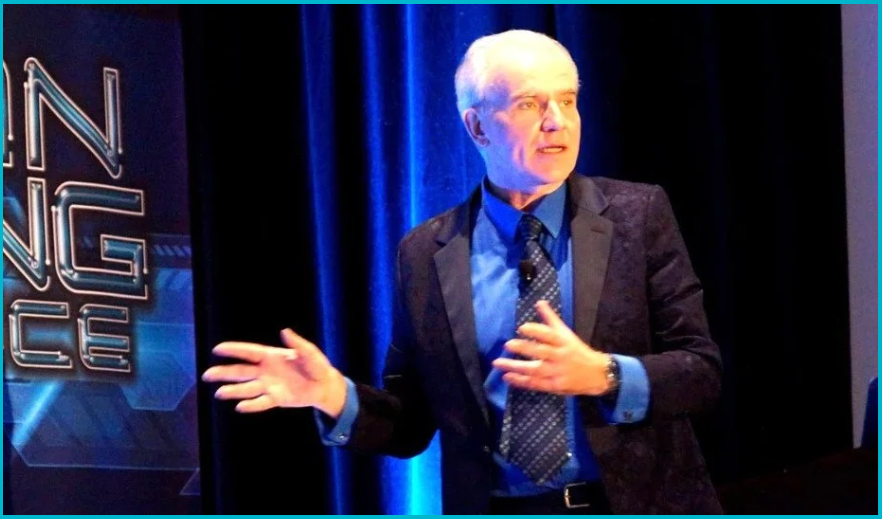
Ian Rowland and Practical Persuasion
Ian Rowland's work in communication, persuasion, mentalism, and practical psychology offers an interesting perspective for sales professionals.
His approach emphasizes understanding people and improving communication rather than relying entirely on rigid sales scripts.
This makes sales coaching particularly valuable when it incorporates practical persuasion and communication principles.
Sales professionals can benefit from learning not just what to say, but how to observe, listen, ask questions, understand reactions, and adapt their approach.
How to Make Sales Coaching Effective
For sales coaching to produce meaningful results, it should be practical and consistent.
A useful coaching process might include:
Review a recent sales conversation.
Identify one or two areas for improvement.
Discuss alternative approaches.
Practice the new approach.
Apply it during real sales conversations.
Review the results.
Continue developing the skill.
Trying to improve everything at once can become overwhelming. Focusing on one specific behavior at a time can make development easier to measure.
Sales coaching can help sales professionals develop the communication and decision-making skills needed for modern selling.
The strongest coaching does not simply focus on sales numbers. It examines the behaviors behind those numbers and helps employees understand how their communication affects customers.
By developing better listening, questioning, persuasion, objection handling, presentation, and relationship-building skills, salespeople can become more confident and adaptable.
For companies looking to strengthen their sales teams, sales coaching provides an ongoing approach to professional development. Combined with practical sales training, communication psychology, and real-world practice, it can help create sales professionals who are better prepared for the complexity of modern customer conversations.