

Team Building Activities: Ideas to Strengthen Communication and Teamwork
Team Building Activities: Ideas to Strengthen Communication and Teamwork
The right team building activities can do much more than give employees a break from their normal routine. Well-designed activities can improve communication, encourage collaboration, strengthen relationships, build trust, and help teams understand how they work together.

Whether you manage a small business, lead a corporate department, organise a conference, or plan an employee retreat, choosing effective team building activities can make a meaningful difference to your team.
The best activities are not necessarily the loudest or most complicated. They are activities that encourage people to interact, solve problems, communicate, listen, and work toward a shared objective.
What Are Team Building Activities?
Team building activities are structured exercises, games, workshops, challenges, or experiences designed to help people develop stronger working relationships.
They can be used by companies of almost any size and can take place in an office, conference venue, outdoor location, hotel, or virtual environment.
Some team building activities focus on communication. Others emphasise problem solving, creativity, leadership, trust, or collaboration.
The most effective activities are usually connected to a specific goal rather than being selected simply because they are entertaining.
Why Are Team Building Activities Important?
Modern workplaces depend heavily on collaboration.
Employees may work together across different departments, locations, time zones, and communication platforms. Even when everyone is technically capable of doing their job, poor communication can create misunderstandings, delays, frustration, and unnecessary conflict.
Well-planned team building activities give employees an opportunity to interact in a different environment.
They can encourage people to:
Communicate more openly
Listen to colleagues
Build trust
Solve problems together
Understand different perspectives
Develop leadership skills
Become more comfortable collaborating
Strengthen workplace relationships
These benefits can continue after the activity has finished.
Team Building Activities for Communication
Communication is one of the most important areas that team building activities can address.
Consider an activity where one team member has information that another person needs to complete a task. Success depends on communicating that information clearly.
Such exercises can demonstrate how easily messages become misunderstood.
They can also show the importance of asking questions, listening carefully, and confirming understanding.
A communication-focused activity does not need to be complicated. Even a short challenge can reveal useful lessons about how a team shares information.
Problem-Solving Team Building Activities
Problem solving is another excellent focus for team building activities.
Give a team a challenge that initially appears difficult or impossible.

The group must work together to identify the problem, generate ideas, test possibilities, and agree on a solution.
These challenges can help employees recognise different problem-solving styles.
One person may naturally take the lead.
Another may generate creative ideas.
Someone else may notice practical limitations that the rest of the team overlooked.
When these different strengths come together, teams can discover that effective problem solving is often a collaborative process.
Creative Team Building Activities
Creative exercises can be particularly useful for teams that work in marketing, design, product development, communications, or innovation.
Creative team building activities can include storytelling challenges, idea-generation games, design tasks, improvisation exercises, or unusual problem-solving challenges.
The purpose is not necessarily to produce something perfect.
Instead, the goal is to encourage people to think differently and become comfortable sharing ideas.
This can create an environment where employees feel more confident contributing suggestions during normal workplace discussions.
Team Building Activities for Leadership
Leadership development does not always have to involve a traditional presentation or seminar.
Some team building activities can naturally introduce leadership challenges.
For example, a group may be given a complex task with limited time and resources.
Who takes responsibility?
Who listens to other people?
Who keeps the group focused?
Who notices when someone is being left out?
Who helps resolve disagreements?
These situations can reveal leadership behaviours that may not be obvious during an ordinary workday.
They can also help emerging leaders practise communication and decision-making in a low-risk environment.
Team Building Activities for Corporate Events
Corporate events are an ideal setting for team building activities.
A conference or company retreat gives employees the opportunity to step away from their normal responsibilities and interact with colleagues in a different setting.
Instead of filling every break with presentations, organisers can incorporate short interactive activities.
A 15-minute communication challenge, for example, can energise participants between sessions.
Longer workshops can provide a more immersive experience and create opportunities for deeper team development.
The activity should match the purpose and atmosphere of the event.
Interactive Team Building Activities
Interactive experiences are often more memorable than passive presentations.
This is why interactive team building activities can be particularly effective.
Participants are not simply listening to someone explain teamwork.
They are experiencing it.
They have to communicate.
They have to make decisions.
They have to respond to unexpected situations.
They can immediately see what happens when communication succeeds or breaks down.
This creates a practical learning experience that employees can discuss afterwards.
Mentalism-Based Team Building Activities
Mentalism can provide a unique approach to team building activities.
A mentalism workshop can combine entertainment with lessons about communication, observation, perception, and human behaviour.
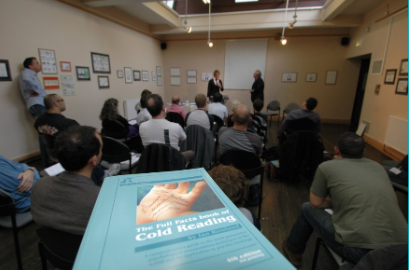
Participants may take part in demonstrations and interactive exercises that encourage them to think about how people interpret information.
This can be particularly effective for corporate groups because it creates an experience that feels different from a traditional workplace training session.
A well-designed mentalism workshop can be entertaining while still encouraging participants to communicate and collaborate.
Team Building Activities for Remote Teams
Remote and hybrid teams require a different approach to team building activities.
Employees who rarely meet face-to-face may need intentional opportunities to build relationships.
Virtual activities can include:
Online problem-solving challenges
Team quizzes
Virtual escape-room experiences
Collaborative storytelling
Communication games
Online workshops
Virtual mentalism demonstrations
The most important factor is participation.
A successful virtual activity should give everyone an opportunity to contribute rather than allowing the session to become another meeting where only a few people speak.
How to Choose the Right Team Building Activities
Not every activity will work for every organisation.
Before choosing team building activities, consider your goals.
Are you trying to improve communication?
Build trust?
Encourage creativity?
Develop leadership?
Help a newly formed team get to know each other?
Improve collaboration between departments?
The answer will influence which activity is most appropriate.
You should also consider the size of your team, available time, location, budget, accessibility, and the personalities of participants.
An activity that works brilliantly for a group of 20 people may not be suitable for 200.
Making Team Building Activities More Effective
Simply organising team building activities does not automatically guarantee better teamwork.
The follow-up is important.
After the activity, give participants time to discuss what happened.
Ask questions such as:
What worked well?
What was difficult?
How did the group make decisions?
Did everyone have an opportunity to contribute?
What communication problems appeared?
What could we do differently at work?
These conversations help participants connect the activity to their everyday responsibilities.
Without reflection, an activity may be enjoyable but have limited long-term impact.
Team Building Activities That People Actually Enjoy
One of the biggest challenges with workplace activities is employee engagement.
People are more likely to participate when an activity feels genuinely enjoyable rather than forced.
That is why successful team building activities often combine entertainment with a meaningful objective.
Employees should feel that they are participating in an experience rather than simply completing another corporate exercise.
Interactive workshops, creative challenges, mentalism experiences, and problem-solving sessions can all provide this balance.
Team Building Activities
The best team building activities create opportunities for people to communicate, collaborate, solve problems, and connect outside their normal work routines.

Whether you choose a communication exercise, creative challenge, leadership activity, problem-solving workshop, virtual experience, or interactive mentalism session, the key is to have a clear purpose.
A successful team-building experience should leave participants with more than a few hours of entertainment. It should give them new insights into how they communicate, how they collaborate, and how they can work more effectively together.
When carefully planned and connected to real workplace goals, team building activities can become a valuable part of corporate training, leadership development, company retreats, conferences, and employee engagement programs.