

Most Common Cold Reads: The Go-To Statements Psychics Use Again and Again
Most Common Cold Reads: The Go-To Statements Psychics Use Again and Again
If you sat through a hundred psychic readings and wrote down every line, you'd notice something strange very quickly. The same handful of statements would appear over and over, barely changed. That's because the most common cold reads aren't improvised in the moment. They're reliable workhorses, refined over decades because they almost never fail.
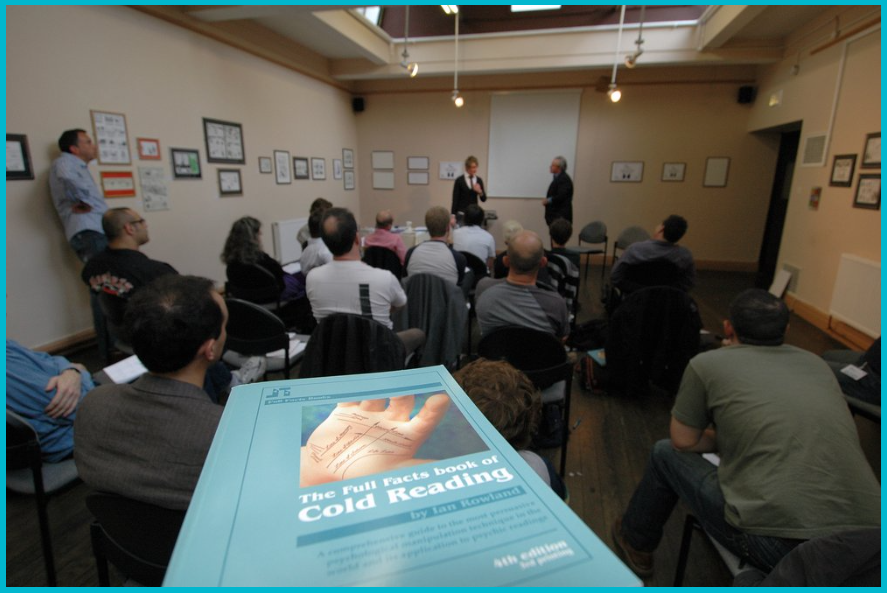
Knowing the most common cold reads is genuinely useful, and not only to performers. Once you can recognise them, you'll spot them instantly in a reading, a sales pitch, or a horoscope, and you'll understand exactly why a total stranger's words felt so personal.
In this article, we'll look at what makes a cold read so dependable, count down the most common cold reads you'll encounter, and finish with how to recognise them and why honesty matters.
What Makes a Cold Read "Common"?
A cold read becomes one of the most common cold reads for a simple reason: it works on almost everyone, almost every time. These aren't clever or original lines. They're the opposite, broad enough to fit any listener, yet phrased to feel like a piece of private insight.
The best of them tick three boxes. They're statistically safe, they can't easily be disproved, and they flatter the listener just enough to keep them nodding. Any statement that does all three earns its place in the regular rotation.
The Most Common Cold Reads, Counted Down
Here are ten of the most common cold reads, the lines you're most likely to hear in the wild.

The Self-Critic – "You're harder on yourself than anyone around you realises." Almost universally true, and quietly flattering.
The Two-Sided Personality – "You can be sociable and outgoing, but there's a private side you keep to yourself." It covers both poles, so it's always right.
The Recent Change – "Something significant has shifted in your life in the last year or two." Statistically near-certain, with a timeframe vague enough to fit anyone.
The Unused Potential – "You have far more potential than you've been able to use." Flattering, forward-looking, and impossible to argue with.
The Sentimental Keepsake – "You've held onto something with no real value purely for sentimental reasons." A near-universal habit dressed up as insight.
The Decision in the Air – "You've been weighing up a decision or a change recently." Most people always are, so the listener supplies the detail.
The Common Initial – "There's a name beginning with J, or perhaps M, that means something to you." The most frequent initials, offered as a safe pair.
The Health Concern – "Health, yours or someone close to you, has been on your mind." A safe, caring guess that feels strikingly specific.
The Misunderstood Streak – "People don't always appreciate how much you do for them." Validating, relatable, and quietly addictive to hear.
The Vanishing Negative – "You're not someone who's easily fooled." Nobody disagrees, and it flatters the listener's judgement in the process.
What unites the most common cold reads is how ordinary they look on paper, and how personal they feel when aimed directly at you.

Why the Same Cold Reads Keep Coming Back
The most common cold reads survive because of how the human mind handles them. We remember the hits and quietly forget the misses, so a line that's "mostly right" gets filed away as "amazingly accurate."
We also do the heavy lifting ourselves. Hand someone a vague statement and they'll unconsciously search their own life for a match, then credit the reader with the discovery. That's why the most common cold reads never go out of fashion. They're powered by the listener, not the speaker.
Where You'll Hear the Most Common Cold Reads
These lines reach far beyond the psychic's table. The most common cold reads turn up wherever someone wants to seem perceptive:
Horoscopes: built almost entirely from these universal statements.
Sales: "You strike me as someone who does their homework before buying."
Networking: "You're clearly the person people turn to for advice."
Online quizzes and personality tests: flattering, one-size-fits-all results.
Recognising the most common cold reads in these settings is oddly satisfying, and a little disenchanting.
How to Spot the Most Common Cold Reads
Once you know the pattern, the most common cold reads are easy to catch in real time:
Ask if it's true of almost everyone – If yes, it's a cold read, not a revelation.
Watch for the two-sided trick – Any "you're X, but also the opposite of X" is a giveaway.
Notice who's doing the work – If you're the one supplying the specifics, you're being read.
Track the misses – Pay attention to what didn't land. The hits suddenly look far less impressive.
The Ethical Dimension
A serious word. Understanding the most common cold reads should make you a sharper, more empathetic communicator, not someone who preys on the trusting. The same lines that build warm rapport can also be used to exploit grief and vulnerability, and that's exactly the abuse that gives cold reading its dark reputation.
Used honestly, the lessons behind the most common cold reads simply help you listen better and make people feel genuinely understood.

Themost common cold reads endure because they reveal something true about all of us: we're pattern-seekers who long to feel seen. There's nothing supernatural about it, only psychology, probability, and carefully chosen words. Learn to recognise these reads and you'll never hear a "psychic" the same way again.
So the next time a stranger's words feel uncannily personal, run them through the list. The odds are good you've just spotted one of the most common cold readsin the book.