

Most Common Cold Reads: Examples and the Psychology Behind Them
Most Common Cold Reads: Examples and the Psychology Behind Them
Cold reading is a fascinating subject that combines language, observation, and an understanding of how people interpret information. Whether you are interested in mentalism, psychology, or communication, exploring the most common cold reads can help explain why certain statements seem remarkably personaleven when they could apply to many people.
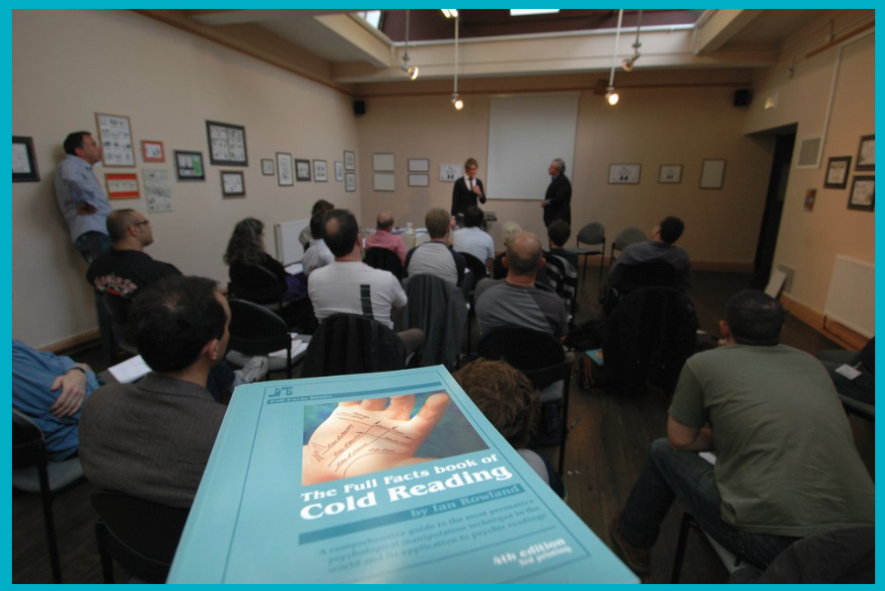
Cold reading is often associated with mentalists and psychic-style performances. It involves using statements, questions, observations, and feedback to create the impression of knowing something about another person without being given that information directly.
Ian Rowland, author of The Full Facts Book of Cold Reading, explores the techniques behind this subject. His work offers a useful starting point for readers who want to understand how cold reading works rather than simply accept its effects at face value.
In this guide, we will explore the most common cold reads, examine why they can sound convincing, and consider what they reveal about communication and human perception.
What Are Cold Reads?
A cold read is a statement or conversational approach used to make an apparently insightful observation about someone without having substantial prior information about them.
Some cold reads rely on common human experiences. Others involve noticing visible details, asking questions, or adjusting a conversation in response to what the other person says.
For example, a statement such as “You sometimes find it difficult to make a decision when the outcome matters to you” may resonate with many people. It sounds personal, but it describes an experience that is far from unusual.
The most common cold reads often work by drawing attention to familiar feelings, relationships, ambitions, and uncertainties. Understanding these patterns helps explain why a statement can feel specific even when it is broadly applicable.
The Most Common Cold Reads and Why They Work
1. The Struggle Between Confidence and Self-Doubt
One of the most common cold reads focuses on the contrast between confidence and uncertainty.
For example:
“You usually try to handle things independently, but there are moments when you wish you had more reassurance.”
Many people can relate to both sides of this statement. They may be confident in some situations and uncertain in others.
This type of statement feels personal because it acknowledges two experiences that can coexist. It does not force the listener into a single category.
The lesson is that people are complex. Statements that recognize ordinary contradictions can sound more meaningful than simple descriptions of personality.
2. Wanting to Be Understood
Another common cold read involves the desire to be understood by other people.
For example:
“You appreciate it when people recognize your intentions instead of judging you only by your actions.”
This may resonate with people who have experienced misunderstandings at work, in friendships, or within their families.
The statement is relatable because most people want their intentions to be understood, particularly when a situation is complicated.
When studying the most common cold reads, it is useful to notice how often they focus on universal social needs rather than unusual personal facts.
3. Having Unrecognized Potential
Some cold reads refer to a person's abilities or opportunities.
For example:

“You feel that you could accomplish more if you had the right circumstances or a clearer direction.”
This statement connects ambition with frustration. It may resonate with someone considering a career change, learning a new skill, or pursuing a personal goal.
Its broad wording leaves room for different interpretations. One person might think about work, while another might connect it to a creative project or a personal ambition.
The example illustrates how a statement can feel relevant without identifying a specific achievement or predicting a particular outcome.
4. Being Social but Needing Time Alone
A common personality-related cold read describes someone as enjoying company while also valuing solitude.
For example:
“You enjoy connecting with people, but you also need time to yourself to recharge.”
This statement covers two familiar preferences. Someone may be sociable in a comfortable environment but prefer quiet time after a demanding day.
Because it allows for both sides of a personality, the statement can resonate with a wide range of listeners.
It also demonstrates why labels should be used carefully. A person's social preferences can change depending on their circumstances, energy, and environment.
5. Feeling Responsible for Other People
Some of the most common cold reads focus on responsibility and caring for others.
For example:
“You often try to support the people around you, even when you have your own concerns to deal with.”
Many people take on responsibilities for family members, friends, colleagues, or teams. The statement may therefore feel familiar even without specific knowledge of the listener's life.
This example also shows how a flattering or sympathetic description can encourage someone to recognize themselves in a general statement.
However, a statement being relatable does not mean it has been independently verified.
6. Wanting Change but Preferring Security
Another familiar theme is the tension between wanting something new and avoiding unnecessary risk.
For example:
“There is something you would like to change, but you want to be reasonably sure before taking the next step.”
This could refer to a job, a relationship, a personal project, or a lifestyle decision.
The statement is flexible because it does not identify the change or the reason for hesitation. The listener supplies the context from their own experience.
Understanding this pattern can help readers recognize how a general statement may feel highly specific when someone connects it to a personal situation.
7. Remembering an Unresolved Disappointment
Some cold reads refer to a past experience that did not turn out as expected.
For example:
“You have experienced a disappointment that taught you to be more careful about where you place your trust.”
Disappointment and changes in trust are common parts of life. However, this type of statement can also touch on sensitive experiences.
For that reason, it is important to distinguish between studying the technique and making unsupported claims about someone's personal history. A general statement should never be presented as proof that the speaker knows what happened to another person.
Why Do the Most Common Cold Reads Feel So Accurate?
Several communication and psychological factors can help explain why cold reads resonate with people.
Broad statements can fit many experiences
A statement that covers a common human experience has a greater chance of being relevant to a listener than one that makes a highly specific claim.

For example, many people have experienced uncertainty, disappointment, ambition, or a desire for stronger relationships. A statement about these subjects can therefore feel familiar.
People connect statements to their own lives
When a statement leaves details unspecified, listeners may supply examples from their own experiences.
One person might connect a comment about responsibility to family life, while another might think about work. The same words can therefore acquire different meanings for different people.
Positive descriptions can be appealing
Statements that describe someone as caring, capable, thoughtful, or resilient can be pleasant to hear. Their positive tone may contribute to how the listener responds.
This does not automatically mean that the description is accurate. It simply highlights the importance of separating emotional resonance from evidence.
Memory and interpretation influence perception
People may remember statements that seem accurate more readily than statements that do not fit. They may also reinterpret ambiguous wording after a conversation.
These possibilities are worth considering when evaluating claims of extraordinary insight. A strong impression is not necessarily proof of unusual knowledge or ability.
What Ian Rowland's Work Teaches Us About Cold Reading
Ian Rowland's The Full Facts Book of Cold Reading is a relevant resource for readers who want to explore cold reading in a structured way.
Rather than focusing only on memorable examples, students can use the subject to examine how statements are constructed, how conversations develop, and how people interpret what they hear.
Studying cold reading can encourage readers to ask several important questions:
What information was actually available before the statement was made?
Is the statement specific enough to be tested?
Could it apply to many people?
Did the listener provide information that shaped the conversation?
Is the interpretation supported by evidence, or does it rely on assumptions?
These questions help develop critical thinking and a clearer understanding of communication.
The subject can also interest mentalists, performers, and people who study interpersonal communication. Its value lies not only in understanding how an effect is created, but also in recognizing the limitations of the information being presented.
How to Study Cold Reads Responsibly
If you want to learn about the most common cold reads, begin by examining examples rather than treating them as proven insights.
Try taking a broad statement and asking how many different people might identify with it. Then consider what additional information would be necessary to make the statement more specific and verifiable.
You can also practise separating observation from interpretation. Noticing that someone speaks quietly is an observation; concluding that they lack confidence is an interpretation that may be wrong.
In everyday conversations, use questions to understand people rather than to manipulate them. Avoid presenting guesses as facts, particularly when the subject involves health, relationships, finances, grief, or other sensitive matters.
In entertainment, transparency about the nature of a performance and respect for audience members are important. Understanding cold reading should promote awareness, not encourage the exploitation of trust.
Understanding the Most Common Cold Reads
The most common cold reads often involve familiar human experiences, including self-doubt, ambition, responsibility, relationships, and the desire for change. Their apparent accuracy can come from broad wording, personal interpretation, and the way people respond to information.

Studying these examples offers a useful introduction to cold reading and the communication principles associated with it. Ian Rowland's The Full Facts Book of Cold Reading provides a starting point for readers who want to examine the subject in greater depth.
Ultimately, learning about cold reading is not simply about recognizing familiar statements. It is about understanding how language shapes perception, questioning assumptions, and distinguishing a statement that feels accurate from one that is supported by specific evidence.